
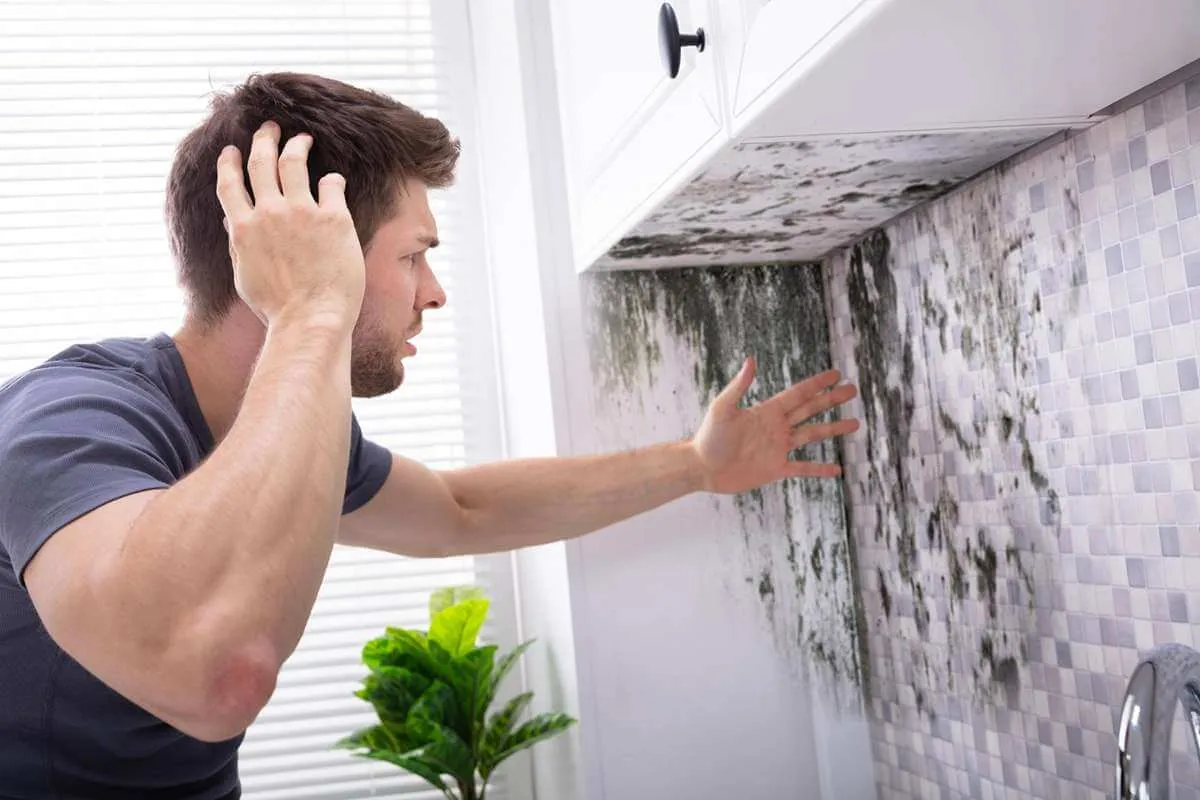
Your walls could be hiding a secret that impacts you and your home’s health. National housing studies show that nearly 47% of all homes in the United States have some form of mold or moisture issue.
That is half of the houses in your neighborhood.
In Charlottesville, the beautiful green hills come with a hidden price: high humidity. If you have noticed a musty smell or strange dark spots, you are probably asking, “Why is mold growing in my house?”
This blog shows you why this happens and how a professional mold inspection in Charlottesville, VA, protects your family. You will learn how to spot the early signs before they turn into a massive repair bill.
The Charlottesville Humidity Trap
Our local weather is the biggest reason mold loves your house. July and August in Virginia feel like walking through a warm soup.
The Environmental Protection Agency (EPA) warns that mold grows when indoor humidity stays above 60%, and Charlottesville often hits much higher numbers.
When the air is heavy with water, your drywall and wood framing soak it up.
Lessons From Local History
Even the most famous buildings in our area struggle with this issue.
Back in 2018, the University of Virginia had to move dozens of students out of their dorms. The reason was rampant mold growth caused by moisture in the HVAC systems.
If a world-class university with a huge budget deals with this, your home is at risk too. It proves mold doesn’t care how much your house costs or where it is located.
What Causes Mold to Grow in Your Home?
You might think your home is dry because you do not see standing water. However, mold is sneaky and prefers the dark corners you never look at.
Here is a quick breakdown of common moisture levels:
| Humidity Level | Mold Risk | What To Do |
| Below 30% | Low | Use a humidifier if the air feels too dry. |
| 30% to 50% | Ideal | This is the sweet spot for a healthy home. |
| Above 60% | High | Run a dehumidifier and check for leaks immediately. |
If your indoor air stays in that high range, mold spores will land and start growing in 24 hours.
The Red Clay Soil Problem
The soil beneath your foundation plays a massive role in how moisture enters your living space. Charlottesville homes sit atop dense Piedmont Cecil-Appling red clay, an expansive soil type that retains heavy rainfall and exerts significant hydrostatic pressure against sub-grade foundation walls.
In traditional vented crawlspaces, humid summer air undergoes psychrometric cooling as it meets the cooler, shaded subfloor. As air cools, its relative humidity increases.
When Wood Moisture Content (%WMC) in floor joists exceeds 20%, it creates an ideal ecological niche for Aspergillus, Penicillium, and wood-destroying white rot fungi to feed on structural framing.
Common Hiding Spots You Might Miss
Most people look for mold in the shower. That is the easy stuff to find and clean. The real danger comes from the places you rarely visit.
- Behind Refrigerators: Household dust buildup combined with subtle ice-maker line micro-leaks creates ideal conditions for hidden spore colonies.
- Inside HVAC Air Handlers: Condensate pan overflows or uninsulated ductwork cause mold to blow directly through supply registers into living spaces.
- Attic Roof Decks: Damaged flashing or slipped architectural shingles allow rainwater to saturate plywood sheathing from above.
- Unsealed Crawlspaces: Unencapsulated soil beds allow ground moisture to continuously evaporate upward into structural floor framing.
Why DIY Bleach Is Not The Answer
Many people grab a bottle of bleach when they see a black spot. This mistake can actually make the problem worse.
Bleach is composed primarily of water. Its chemical structure prevents chlorine from penetrating porous surfaces like drywall, OSB, or pine framing to reach embedded fungal hyphae (the root system).
The chlorine remains on the surface while the water sinks deeper into the substrate, providing fresh moisture that feeds the root structure and drives rapid regrowth.
Environmental Health Red Flags
Sometimes you feel the mold before you see it.
The Centers for Disease Control (CDC) states that mold exposure causes coughing and itchy eyes. If you feel better when you leave the house and worse when you come home, pay attention.
Chronic headaches or a stuffy nose that won’t go away are major red flags. Do not ignore what your body is trying to tell you about your environment.
The Value of A Mold Inspection in Charlottesville, VA
You cannot fix a problem if you do not know where it starts. A pro knows exactly where to look and what tools to use.
Professional diagnostic audits conform to strict ANSI/IICRC S520 protocols. Certified inspectors combine FLIR thermal imaging (which detects evaporative cooling signatures from hidden moisture behind plaster and drywall) with Air-O-Cell spore trap cassette air sampling.
Laboratory analysis compares indoor spore counts against outdoor baselines to quantify whether active indoor amplification is occurring.
Get A Clear Picture of Your Home’s Health
The first move is always to stop the water source. Whether it is a leaky pipe or high humidity, the water has to go.
Then, you need to find every single spot where the mold is hiding. Do not let a small damp spot turn into a massive renovation project.
Knowledge is your best defense against the humid Virginia climate.
If you are worried about what is growing in your crawl space or attic, Clatterbuck Home Inspections is here to help. As a professional home inspection company, we have the experience and tools to find hidden moisture before it ruins your home. Give your family a healthy place to live by scheduling your thorough inspection today.