
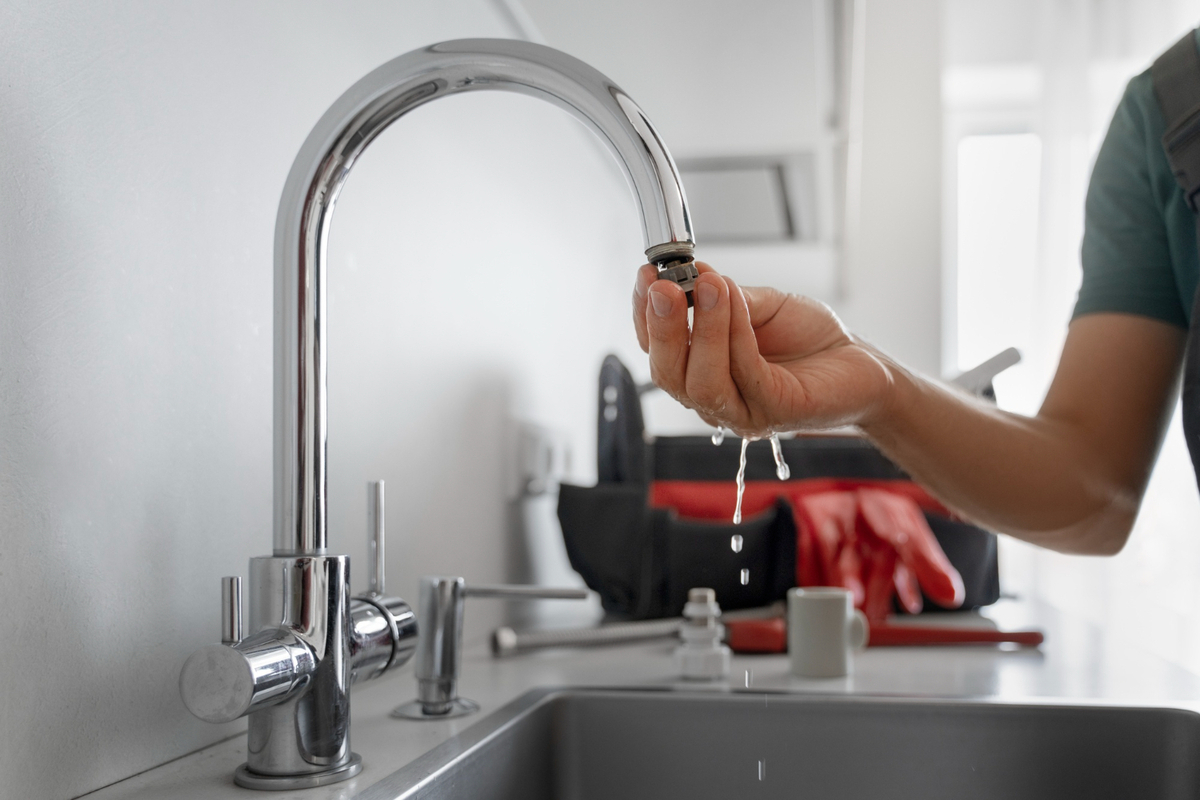
If your home relies on well water, yearly testing is something you should not skip. Even small changes in your water can affect your health, your plumbing, and your peace of mind.
Let’s go through why annual well water testing matters, what the process includes, and how it helps keep your water safe to drink.
Why you should care about a well water checkup
Imagine the following: it is a quiet afternoon, you have filled your glass with tap water, and it seems okay.
But what if it is carrying bacteria, or nitrates, or some other dangerous chemical to which you never thought to inquire?
Since your personal well is not monitored like a municipal water system, you are responsible for its upkeep and maintenance.
The Centers for Disease Control and Prevention (CDC) recommends testing your well water for key contaminants every year.
According to a study, an estimated 23 million families in the United States rely on private wells, and many do not test their wells annually.
That’s a big deal. Doing annual well-water testing isn’t just checking a box; it’s protecting your health and your family’s.
What does an Annual Well Water Testing Involve
When you schedule your well water checkup, you’re really doing two things: inspecting the well system and checking the water quality. The National Ground Water Association advises that the well system should be checked annually to ensure it is functioning properly.
The well inspection usually unfolds as follows:
- An expert checks the well equipment, inspects the well head, well casing seal, and the probability of surface water contamination.
- Next, you test the water itself. The CDC recommends checking for total coliform bacteria, nitrates, pH, and total dissolved solids (TDS).
- Depending on the geology of the area where you live, you can test the presence of other problems such as arsenic, lead, volatile organic compounds (VOCs), or pesticides.
So your annual well water testing means more than a “quick glance,” it means a comprehensive look at your well’s health.
In Case of Additional Urgency
Despite the annual check-ups, there may be cases when it is better to take the test sooner. For example:
- Following rain or a flood surge (surface water may introduce contaminants into the well).
- When you see any change in your water, for example, it has a different smell, taste, or color.
- In case you have done significant work on your well or plumbing system (e.g., a new pump or a casing repair).
- If you live near an agricultural area, an industrial facility, or a septic system, this may affect the quality of the underground water.
These are ominous signs that say, “Don’t wait for next year; test now.”
The Data Shows it Matters
The following facts support this:
- 15% of the U.S. population, approximately 43 million people, rely on their own sources of drinking water, either through private or domestic wells, and these sources are not even subject to the consumer laws of the federal Safe Drinking Water Act.
- Reportedly, in one of the national surveys conducted on approximately 2,100 private wells, more than 20% of them were found to have one or more contaminants at levels of potential health concern.
- A Maryland-based study of 2311 wells concluded that 43.2% of wells failed to meet at least one federal health-related standard; when microbiological contaminants were the sole focus, 25.4% of the failed wells contained total coliform bacteria.
- Nearly 60% of sampled domestic wells contained organic man-made compounds (including pesticides and solvents), even if fewer than 1 % exceeded health‑based benchmarks in that category.
How to Make the Most of Your Well Water Checkup
Here’s a simple-to-follow approach:
- Find a professional who is deemed qualified and certified in well maintenance and water-quality tests in your state.
- Book the water sample and the inspection concurrently. The inspection of the equipment and the lab testing go hand in hand.
- Choose the right tests. Check for bacteria (coliform/ E. coli), nitrates, pH, and TDS. Include other tests if your region demands it.
- Follow up on the outcomes. If the report indicates an outlier (e.g., high nitrate or bacterial levels), take action. Identify the root of the problem, implement a treatment plan, and re-test.
- Keep records. Keep your annual test reports and maintenance records of the store equipment. With a record in place, you can see patterns and have a history if something emerges.
- Talk to your family. If someone in the house is pregnant, young, old, or immunocompromised, then the stakes are higher. Ensure everyone understands the need for clean drinking water.
True life scenario: What Can Go Wrong When You Fail a Test
In a study, one Iowa homeowner stated that he used well water and thought it was okay; he noticed no smell or taste differences.
However, nearby agricultural activity increased the likelihood of nitrates in the aquifer. The resident never had annual well water testing, and the well tested high for nitrates when it was later tested.
If a small kid were drinking that water daily, it would have been a real concern. The message is that hidden dangers do not necessarily manifest. Well water testing would have caught the issue before it became a health concern.
Conclusion
Your well is like your own water utility. But it comes with a responsibility. Committing to annual well water testing ensures you’re checking the health of your well system and protecting your water supply. It is a small investment in time and money that pays off with security, comfort, and value over time.
Do not leave it to that or next year. Make your well water checkup an annual habit.
When you are ready to act and know a professional you can rely on, contact Clatterbuck Home Inspections. Our experienced team will handle your annual well water testing and full well system check-up, provide clear results and guidance, and help you stay ahead of potential problems. Keep your water safe by scheduling your well water inspection today.